

Relaxation vs Deep Tissue Massage: Which One Is Right?
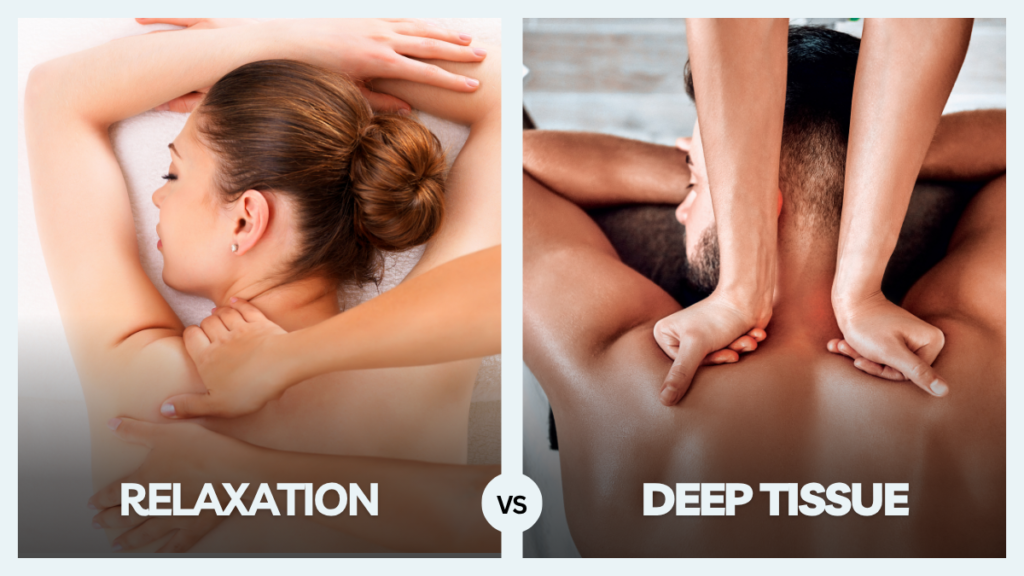
Not all muscle tension feels the same, and understanding the difference between deep tissue vs relaxation massage can help you choose the right approach for your needs.
Some types of tension are linked to stress and nervous system overload. Others are related to physical strain, posture, or repetitive movement. Because of this, choosing between relaxation and deep tissue massage is less about preference and more about understanding what your body needs.
By looking at how each approach affects the body, it becomes easier to choose the option that will provide the most benefit.
How the Body Responds to Stress vs Physical Tension
The body processes stress and physical strain through different systems.
Stress-related tension is primarily regulated by the nervous system. When stress levels remain elevated, the body stays in a more alert state, often leading to shallow breathing, muscle guarding, and general discomfort.
Physical tension, on the other hand, tends to develop from mechanical factors such as repetitive movements, prolonged sitting, or physical activity. This type of tension often becomes more localized and can affect mobility and muscle function over time.
Understanding this difference is key, because each type of tension responds better to a different therapeutic approach.
What Happens During a Relaxation Massage
A relaxation massage primarily works with the nervous system.
Through consistent, rhythmic techniques, it helps shift the body from a more alert state into a parasympathetic state. In this phase, the body slows down, breathing becomes deeper, and muscle tension begins to decrease.
Research has shown that this type of approach can influence heart rate, stress hormone levels, and overall perception of tension. Rather than targeting a specific problem area, it supports the body as a whole.
This is why relaxation massage is often chosen when the main goal is to reduce overall stress and create a sense of balance.
What Happens During a Deep Tissue Massage
Deep tissue massage focuses more on the structure of the muscles and connective tissue.
Instead of working broadly, it uses slower and more specific techniques to target areas where tension has developed over time. This approach can help improve tissue mobility, reduce stiffness, and support how muscles function during movement.
Studies on manual therapy suggest that targeted pressure may influence blood flow, tissue elasticity, and how the body perceives discomfort
Because of this, deep tissue massage is often selected when tension feels more persistent or localized rather than general.
Relaxation vs Deep Tissue: Key Differences
Although both approaches involve therapeutic touch, the intention behind each one is different.
Relaxation massage:
– works primarily with the nervous system
– supports overall stress regulation
– uses consistent, flowing techniques
– focuses on full-body balance
Deep tissue massage:
– works more directly with muscle structure
– targets specific areas of tension
– uses slower, more focused pressure
– supports movement and physical function
These differences are important because choosing the right approach can influence how effective your session feels afterward.
How to Choose Between Relaxation vs Deep Tissue Massage
Instead of choosing based only on the name of the massage, it can be more helpful to focus on how your body feels.
By understanding how each approach affects the body, it becomes easier to choose the option that fits your current needs.
If your tension feels widespread, accompanied by fatigue, mental overload, or difficulty relaxing, relaxation massage may be the more appropriate option.
If your discomfort feels more specific, such as tightness in certain muscles, limited movement, or areas that feel consistently tense, deep tissue massage may be the better choice.
In many cases, the body benefits from different approaches at different times. This depends on daily demands and lifestyle.
Why the Right Choice Can Improve Your Results
Selecting the appropriate type of massage is not just about comfort, but about effectiveness.
When the approach matches the type of tension present in the body, the response tends to be more noticeable. This can include improved mobility, reduced perception of tension, or a greater sense of physical ease.
Choosing a technique that does not match your body’s current needs may lead to a less satisfying experience.
This is why understanding the difference between relaxation and deep tissue massage can make a meaningful impact over time.
Ready to Choose the Right Massage for You?
If you’re deciding between relaxation massage and deep tissue massage, understanding how your body responds to stress and tension can help guide your choice.
You can explore the available options and schedule your visit through our online booking system, choosing the approach that best matches your needs.
If you’re looking for massage therapy in Edmonton, you can also visit our homepage to learn more about our services and approach.